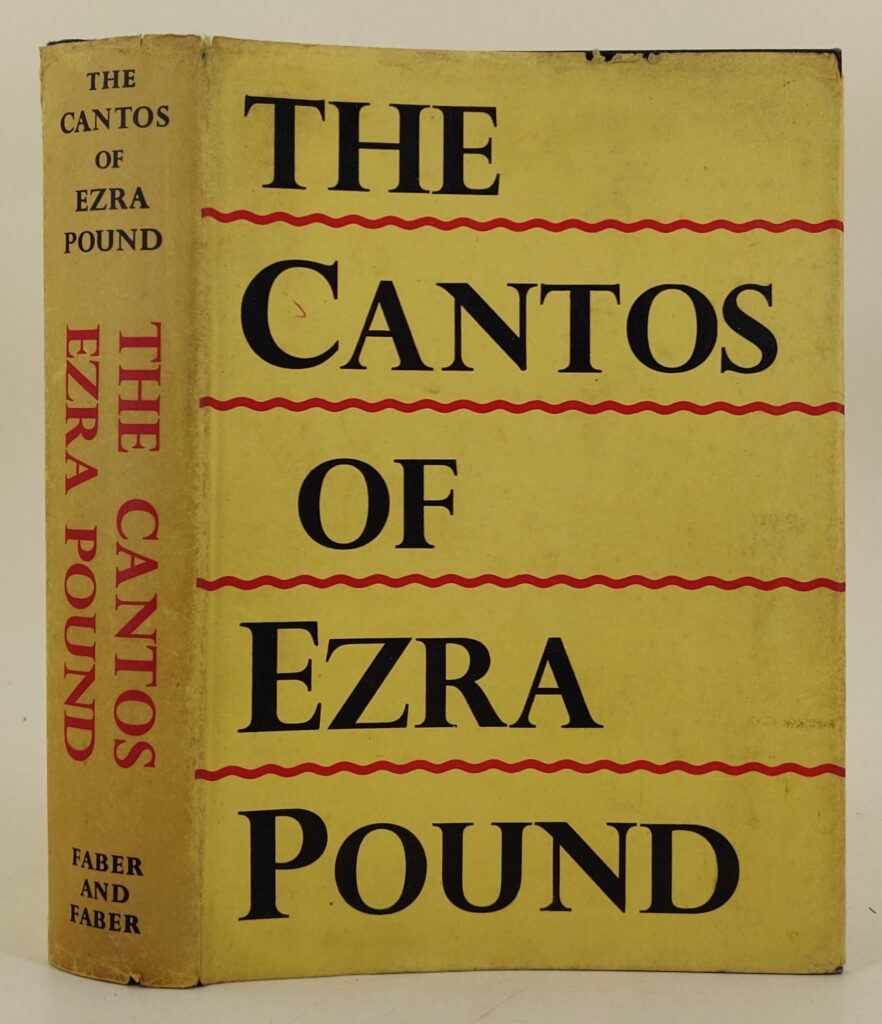
The incomplete poem by the American poet Ezra Pound, written between 1915 and 1962, is considered one of the masterpieces of modernist literature. Collected in about ten volumes, it is divided into 117 sections, each of which constitutes a canto.
Below is an excerpt from The Pisan Cantos, one of the many sections of the Cantos, often mistaken for the entire work, including Cantos 74-84. Written at the end of World War II (1945), it comes to life during the period when the author was interned in a detention camp of the U.S. Army in Arena Metato, near Pisa.
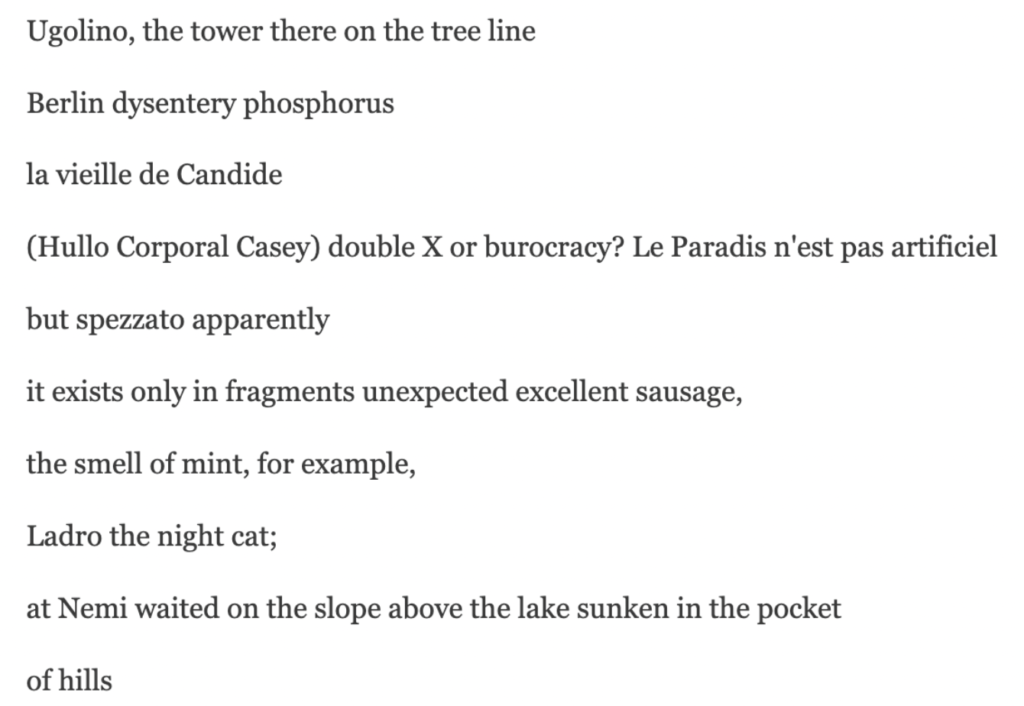
Ezra Puound, The Cantos, Canto LXXIV
Themes such as literature, myth, past and present history, economics, and politics constitute the content of the Cantos and, similarly, of the prose works. Indeed, works such as the Odyssey and the Divine Comedy are of great inspiration for Pound, on one hand, for their world of travels, and on the other, for the evocation of characters from the present and the past.
Due to this strong influence, one of the main characteristics of the author’s texts is the frequent citation of ancient works using classical languages such as Greek, Latin, and Chinese. Indeed, this technique makes the work not only the subject of numerous studies but also unique in its enchanting complexity.
The laboriousness of the poem is further enhanced by the frequent allusions to historical events, a constant desire to relive chronicles of the ancient Mediterranean, the Far East, America, and premodern and modern Europe.
Ezra Pound was awarded the Bollingen Prize in 1949, established by some prominent intellectuals under the auspices of the United States government. This award sparked various controversies: Pound had been indicted and tried as a supporter of the fascist regime and later detained for treason. Subsequently, considered mentally unfit, the author was confined to St. Elizabeths Hospital for the criminally insane in Washington.